

Swelling, bruising, dryness and temporary blurred vision can occur early after blepharoplasty; social recovery often progresses over the first weeks while scars continue to mature for longer.
Last updated: 10 September 2026 · Medically reviewed by Op. Dr. Bahadır Çelik
Eyelid surgery (blepharoplasty) may address excess upper-lid skin or lower-lid bags using an individual surgical plan. Tightness, swelling, bruising, mild soreness, watering, sensitivity to light and temporary blur from lubricating ointment may occur during the first hours. These findings are not automatically a complication, but their severity and direction of change matter.
Keeping the head above the chest, using a cool compress as instructed, applying prescribed drops or ointment correctly and avoiding rubbing are common parts of early care. A cold pack should not be pressed directly against unprotected skin. Follow your own surgical team's timing rather than a fixed schedule found online.
| Period | What may be noticed | Planning note |
|---|---|---|
| First 24–48 hours | Swelling, bruising, watering or dryness, tightness and ointment-related blur | Rest, head elevation and prescribed care follow the surgeon's instructions. |
| Days 3–7 | Bruises change colour, swelling gradually eases and incision lines remain tender | Follow-up and stitch timing depend on the technique used. |
| Days 7–14 | Clear improvement in social appearance, although mild puffiness or discolouration may remain | Desk work is often considered in this period, adjusted for job demands and visibility. |
| Weeks 3–6 | Further settling of swelling and gradual fading of incision redness | Exercise and swimming are increased only after clearance. |
| Following months | Scars soften and fade; the result becomes easier to assess | Sun protection and scheduled follow-up continue. |
This is an average planning guide, not a promise. Upper-only and lower-eyelid procedures do not necessarily feel the same. Lower-lid swelling and colour change may be more noticeable, while an upper-lid incision matures within the natural crease. Treating both areas or combining surgery with a brow lift can extend recovery.
Swelling and bruising are usually most visible early and often diminish progressively over about 10–14 days. Mild residual puffiness can last longer. The two sides may not settle at exactly the same pace, so a small early difference should not be judged as the final symmetry.
Sleeping with the head elevated for several days, using cool compresses as advised, avoiding strenuous activity and staying away from smoke may improve comfort. Rubbing the eyes, putting pressure on an incision or applying an unapproved cream can disturb the healing tissues.
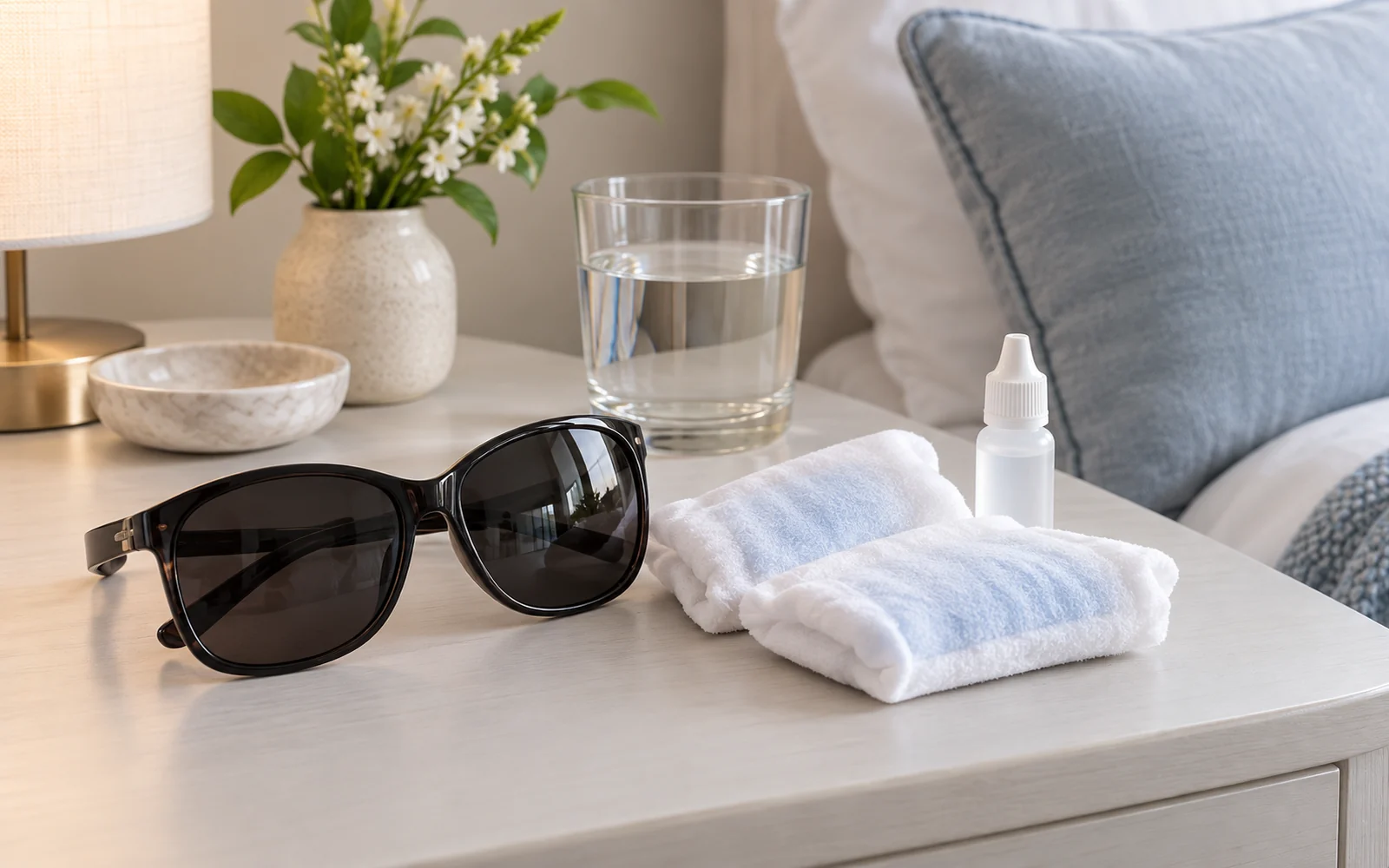
Stitch type and removal timing vary with the technique. Some sutures dissolve, while others are removed during follow-up. NHS patient information notes that thin supporting strips are often removed within up to a week, but this does not replace individual instructions. Do not pull a suture, remove strips early or cover the incision with makeup before approval.
An incision may look pink, feel firm or be slightly raised during the early weeks. Upper-lid scars are commonly placed in the natural fold, yet fading and softening can take months. Careful sun protection matters during this phase. Dark sunglasses may reduce light and wind sensitivity while helping protect delicate healing eyelid skin.
Temporary dryness, grittiness, watering or light sensitivity may occur. Use only drops or ointments that have been recommended. Ask before adding a new eye product, including over-the-counter redness-relief drops. Short-lived blur can result from ointment, but new or worsening visual disturbance should never simply be assumed to be normal.
Screens are not avoided because they damage the operation; they can reduce blinking and make dryness or fatigue more noticeable. Short sessions, regular breaks, larger text and lower brightness may improve comfort. Contact lenses should wait until the incision, dryness and comfortable lid closure have been assessed and the surgeon has agreed.
Some desk-based patients feel ready at around one week, while those who prefer visible bruising to fade may plan 10–14 days. NHS guidance notes that about two weeks away from work may be needed depending on the job. Physical effort, long screen hours, dusty environments and face-to-face duties can all alter the appropriate date.
Driving is not decided by the calendar alone. Clear vision, light sensitivity, comfortable eye closure and the effects of any medication must be considered. Heavy lifting, running, repeated bending, swimming and sauna can increase pressure or irritation and require a gradual, approved return. Flight planning should also account for follow-up, dryness, swelling and access to the clinic if a problem develops.
Mild tightness is different from severe pain that is increasing. Sudden loss or deterioration of vision, worsening double vision, rapidly enlarging one-sided swelling, bleeding that does not stop, severe new eye pain, shortness of breath, chest pain, or increasing redness with fever or foul discharge need prompt medical assessment. Contact the surgical team directly and use emergency services when appropriate rather than waiting for a social-media reply.
Blepharoplasty and brow position address different problems. If the source of heaviness is unclear, see our eyelid surgery or brow lift comparison and arrange an examination for individual planning.
Bruising often improves clearly within 10–14 days, although mild discolouration may last longer. The extent of surgery and individual healing affect the timing.
It depends on the suture and technique. Some dissolve, while others may be removed at a follow-up during the first week; follow only the date given by your surgeon.
Some people with desk jobs return at around one week, while visible bruising, screen use or physical duties may make 10–14 days or longer more appropriate.
Screens do not usually harm the operation, but reduced blinking can increase dryness and fatigue. Build up screen use gradually according to comfort.
Do not wear lenses until dryness, incision healing and comfortable eyelid closure have been reviewed and your surgeon has approved their use.
Incisions can be pink or firm early and generally soften and fade over months. Placement, skin characteristics, sun protection and personal healing influence visibility.
Sudden visual change, severe new eye pain, rapidly increasing one-sided swelling or bleeding that does not stop requires urgent assessment.
Upper-lid skin, lower-lid bags, brow position, dry-eye history and general health can be assessed together to create an individual procedure and recovery plan.
Op. Dr. Bahadır Çelik: This page provides general patient information for the Antalya clinic of Plastic, Reconstructive and Aesthetic Surgery Specialist Op. Dr. Bahadır Çelik. Online information does not replace an examination, diagnosis or treatment plan.
Recovery varies with upper or lower eyelid scope, combined procedures, ocular-surface health and individual healing. Follow only your own surgeon's instructions for medicine, drops, compresses, showering, makeup, lenses, exercise and travel.