
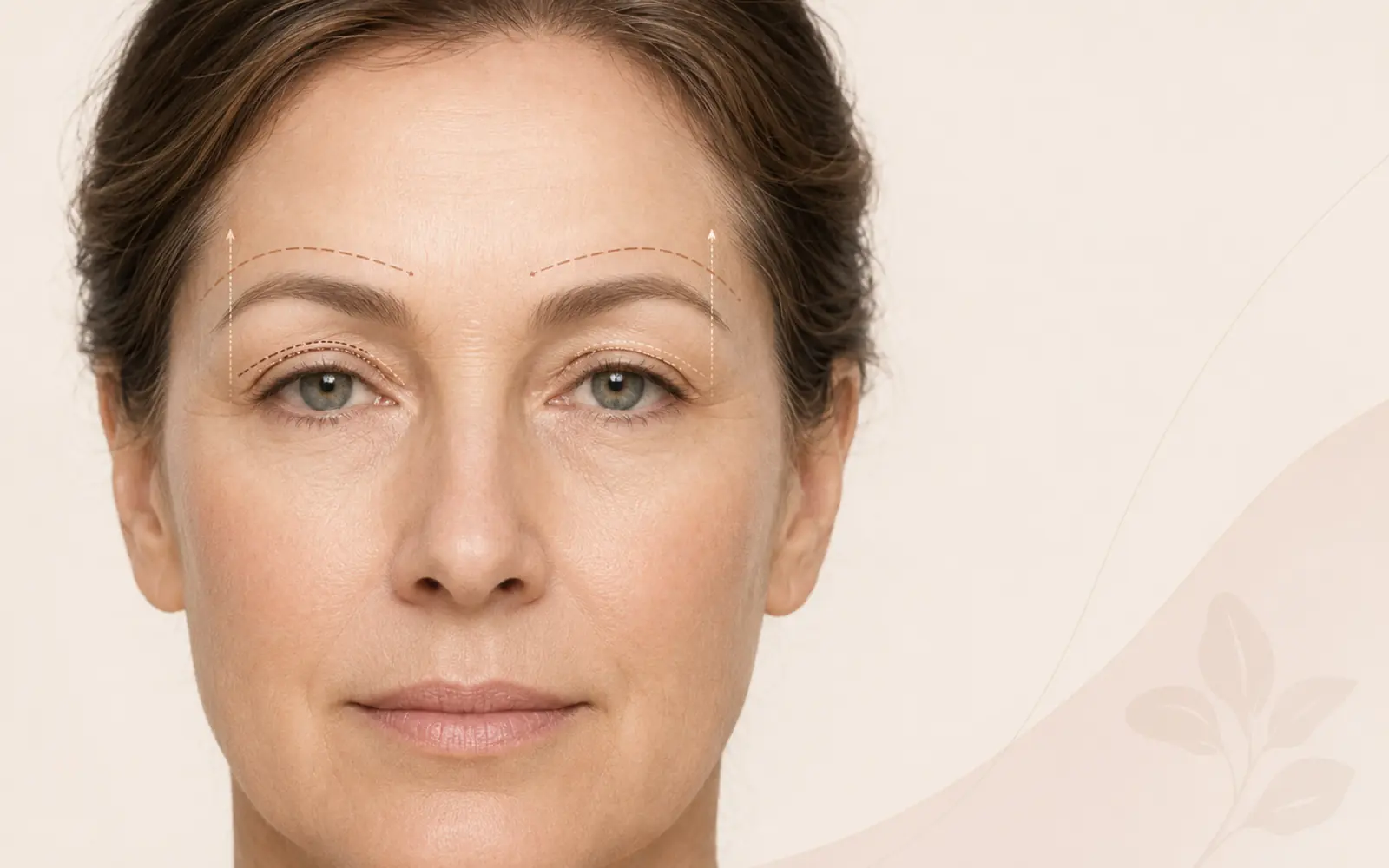
Two people may both describe a tired, heavy or sad-looking eye area, yet the anatomical cause can be completely different. One may have redundant upper-eyelid skin, another may have a low lateral brow, and a third may have true eyelid ptosis caused by weakness or stretching of the eyelid-elevating mechanism.
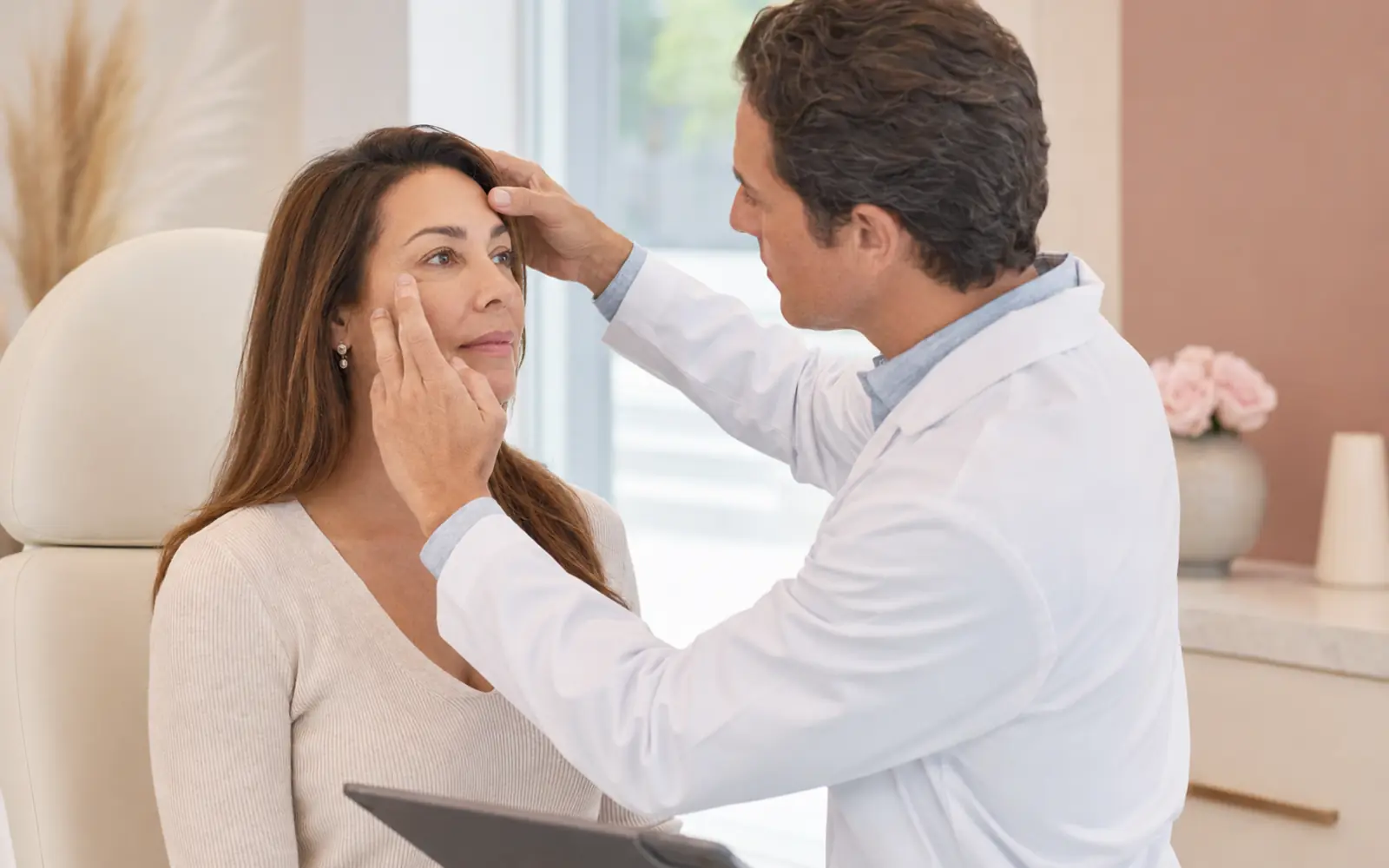
For that reason, the choice between eyelid surgery and a brow lift should not be made from a selfie alone. Brow position at rest, the amount of eyelid skin, the relationship of the upper-lid margin to the pupil, habitual forehead-muscle activity, eye-surface health and existing asymmetry all matter.
Upper eyelid surgery focuses on tissue within the upper eyelid. It may remove or reshape carefully measured skin and, in selected cases, muscle or fat while preserving eyelid closure and a natural crease. It does not intentionally reposition the eyebrow.
Brow lift surgery addresses a descended brow, especially the outer brow, and lax forehead tissues. Repositioning the brow can reduce some of the apparent hooding above the eye. This is why brow position must be assessed before deciding how much eyelid skin is truly redundant.
Common concerns include upper-lid skin folding toward the lashes, loss of a visible lid crease, makeup transferring into the fold and a sense of heaviness late in the day. When skin redundancy is marked, it may contribute to superior visual-field limitation; a functional complaint requires an eye examination and, when appropriate, formal testing.
Lower-eyelid bags, skin laxity and the lid-cheek junction require a separate assessment. Not every “bag” is simply excess fat. Bone structure, midface support, skin quality and eyelid laxity influence the appearance and safety of lower-lid planning.
A low lateral brow, a narrowed brow-to-lash distance, constant unconscious use of the forehead muscles and hooding that improves when the brow is supported can indicate brow descent. Patients may notice that their eyes look heavier when they relax their forehead or that they habitually raise their brows in photographs.
“Brow lift” is not one single technique. Endoscopic, temporal, hairline and direct approaches differ in incision location, lifting vector and suitability. Hairline height, forehead length, hair density, brow shape, skin quality and the required degree of change guide technique selection.
In true ptosis, the upper-lid margin itself sits lower than expected. The problem is different from loose skin or a low brow. A person may recruit the forehead muscle to open the eye, one eye may look smaller, or the lid may cover part of the pupil.
Removing skin alone does not correct true ptosis. Eyelid height, levator function, eye movements and associated neurological or systemic signs must be assessed. Sudden ptosis, double vision, a pupil change or new neurological symptoms require urgent medical evaluation rather than a routine cosmetic consultation.
| Finding | Area to assess | Critical question |
|---|---|---|
| Skin folding over the lid crease or lashes | Upper eyelid | Does the excess remain after the brow is placed in a neutral position? |
| Low outer brow and narrow brow-to-eye distance | Brow and forehead | How much does supporting the brow improve the hooding? |
| Upper-lid margin covering more of the pupil | Eyelid-elevating mechanism | Is there true ptosis or another eye disorder? |
| Low brow plus genuine skin redundancy | Combined assessment | Which component contributes most to the concern? |
| Dry eye, incomplete closure or previous eye surgery | Ocular surface and safety | Could tissue removal worsen closure or dryness? |
Yes, when two independent anatomical findings coexist. More surgery is not automatically better, however. Excessive brow elevation can create surprise, asymmetry or an unwanted hairline change, while excessive eyelid-skin removal can impair closure and aggravate dry eye.
In combined planning, the target brow position is established first. The surgeon then reassesses how much upper-lid skin remains genuinely redundant after brow support. This sequence helps avoid over-treatment and supports a more natural result.
Standardised photographs should be taken with the forehead relaxed. Images in which the patient involuntarily raises the brows can hide the true resting anatomy.
An upper-blepharoplasty incision is usually placed within the natural lid crease. Temporary swelling, bruising, tightness, dryness and light sensitivity can occur. Brow-lift incisions vary by technique and may lie within the scalp, temple or, less commonly, directly above the brow. Forehead tightness, numbness and altered sensation may be temporary parts of recovery.
Return to social activity varies with the technique and any combined procedure. The early brow height and eyelid swelling do not represent the final result; tissue settling and scar maturation take time.
Both operations carry general surgical risks such as bleeding, infection, asymmetry, scarring, altered sensation and possible revision. Eyelid surgery also requires discussion of dry eye, difficulty closing the eye, lower-lid malposition and rare vision-threatening complications. Brow-lift planning includes the possibility of hairline change, local hair loss, nerve effects and brow asymmetry.
This page provides general education. Upper-lid skin redundancy, brow ptosis and true eyelid ptosis can look similar, so an individual plan requires examination and, when indicated, ophthalmic assessment. Sudden eyelid droop should be medically evaluated before it is treated as a cosmetic concern.
It may reduce pseudo-excess created by a low brow. Genuine residual skin redundancy may still require upper-eyelid surgery.
No. It does not intentionally raise the brow. In some people, habitual forehead-muscle use relaxes after surgery and the true resting brow position becomes more noticeable.
It can create a small, temporary change in brow shape in selected patients but does not reproduce surgical correction of marked brow descent or tissue laxity.
Bruising and swelling may involve a wider area. Timing depends on the exact techniques, individual healing and any additional procedures.
A low lid margin, pupil coverage or a clear height difference between the lids raises suspicion. Measurements and an eye examination are needed for diagnosis.
Upper-lid scars usually sit in the natural crease; many brow-lift scars are placed in the scalp or temple. Visibility varies with technique and healing.
Naturalness depends on correctly identifying the source of the problem and making a conservative, proportionate plan—not on the procedure name alone.
Eyelid skin, brow position and lid height should be evaluated together.
Contact and appointmentEyelid surgeryBrow liftReviewed for medical accuracy: This page is prepared for patient education by the clinic of Op. Dr. Bahadır Çelik, Plastic, Reconstructive and Aesthetic Surgery Specialist in Antalya. Online information does not replace a personal examination; suitability, technique and recovery plan must be decided after medical evaluation.