
After pregnancy · Abdominal wall
A bulge after pregnancy: diastasis recti or an umbilical hernia?
You sit up in bed and notice a ridge down the middle of your abdomen. Or perhaps it is one small lump at your belly button. Either can first catch your eye after giving birth. The distinction matters because the next step is different.

In this guide
A ridge down the middle, or one lump at the belly button?
During pregnancy, the band of connective tissue joining the two straight abdominal muscles stretches to make room for the growing uterus. If that band stays wide after birth, the inner edges of the muscles sit farther apart. This is diastasis recti. The muscles have not torn. You might see a long ridge between your breastbone and belly button as you sit up in bed, then see little or nothing when you lie back.
An umbilical hernia is different: there is a local opening in the strong layer of the abdominal wall at or near the navel. Fat, or sometimes a loop of bowel, can push through. The lump you see may be small. Neither its size nor the absence of pain tells you what is inside it.
| What you notice | What it might mean |
|---|---|
| A long ridge along the midline as you sit up | This can fit diastasis. It does not rule out a separate hernia. |
| One lump in or just beside the belly button | Have it examined for a hernia, even if it disappears when you lie down. |
| A small bump sitting on a longer ridge | Both conditions can be present. Point out both areas at your appointment. |
Your ultrasound says “3 cm”. Three centimetres of what?
“Distance between the rectus muscles: 3 cm” is not the same finding as “3 cm umbilical hernia defect.” The first measures the gap between the inner edges of two muscles. The second measures the opening that tissue can push through. A useful question to take to your appointment is: “Did the scan show only a wider gap, or did it also show an opening in the abdominal wall?”
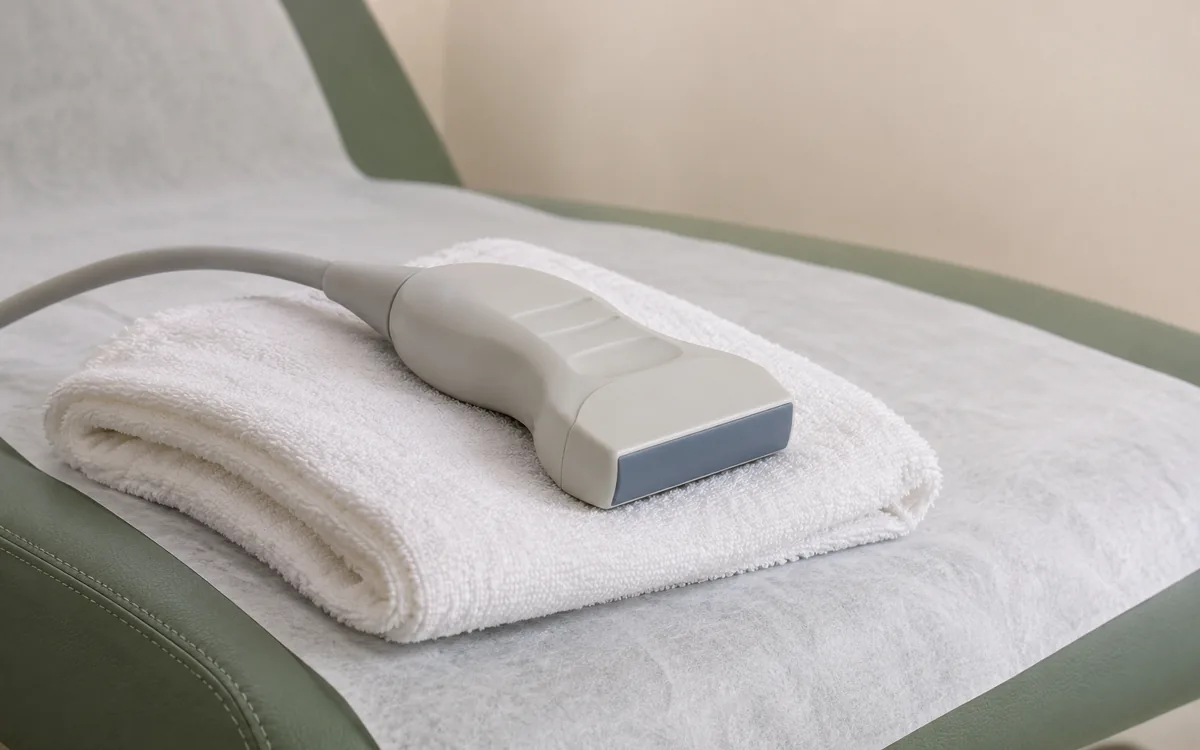
The European Hernia Society uses more than 2 cm of separation to define diastasis. That is a definition, not a threshold for surgery. Two finger widths at home do not equal a 2 cm measurement. A clinician can usually tell a great deal by examining you. Ultrasound can help when a small opening is hard to feel or a more precise measurement would change the plan. A CT scan is not routinely needed for a midline ridge.
Who should you see first?
If the lump at your belly button is new, growing or painful, see your primary care clinician or a general surgeon. A surgeon can confirm whether it is a hernia and talk you through monitoring versus repair. Even if it is painless, make that decision after an examination. Seek emergency care if any of the warning signs above appear.
If your main concern is a broad ridge or difficulty steadying your trunk, bring it up at your postnatal check or with your family doctor. Once a possible hernia has been assessed, a physiotherapist with experience in postnatal care can help you adapt how you move and build up activity. A useful goal is not just a smaller measurement but something you can feel in daily life, such as lifting your baby out of the cot more comfortably.
A tummy tuck addresses a different concern: excess abdominal skin and, when appropriate, a stretched midline. Finding diastasis does not mean you need a tummy tuck. A hernia needs its own assessment. Another pregnancy can also affect the timing of elective surgery. If loose skin is what bothers you, read about what a tummy tuck can address and the difference between a mini and a full tummy tuck.
Three things to bring to the appointment
- Where and when: Is it a single spot at the navel or a line up the middle? When did you first notice it?
- What has changed: Does lifting your baby hurt? Is getting out of bed difficult? Has the lump grown? There is no need to provoke pain to demonstrate it.
- Your history and plans: Bring any scan report. Mention a Caesarean birth or other abdominal surgery and whether you are considering another pregnancy.
Before you leave, ask: “Do I have a hernia as well as a separation? Which changes mean I should seek help sooner?” Those answers are more useful at home than a measurement alone.
Questions that often come up
- Can diastasis itself trap the bowel?
- Diastasis alone does not create a hernia opening in which bowel can become trapped. A separate umbilical hernia can be present, though. Do not assume that a new lump or sudden pain is just your usual diastasis.
- The lump goes away when I lie down. Should I still get it checked?
- Yes. A hernia may show only when you are upright. Describe when you notice it; do not press on it to test it yourself.
- Will exercises or a belly binder close a hernia?
- No. Neither exercise nor a binder closes an adult umbilical hernia. For diastasis, individualised physiotherapy may be an option; no single exercise programme has been shown to be right for everyone.
- Should I wait until after my next pregnancy to seek advice?
- No. You can have the bulge assessed now. Pregnancy plans matter when deciding the timing of an elective repair or a tummy tuck. They are not a reason to delay care for new pain or emergency symptoms.
Sources
- European Hernia Society · Guideline on rectus diastasis
- NHS · Umbilical hernia and emergency symptoms
- American College of Surgeons · Adult umbilical hernia
- American Society of Plastic Surgeons · What a tummy tuck can do
- Cleveland Clinic · Diastasis recti after pregnancy
This guide is general information for adults. It is not a diagnosis or a substitute for an individual medical assessment.