
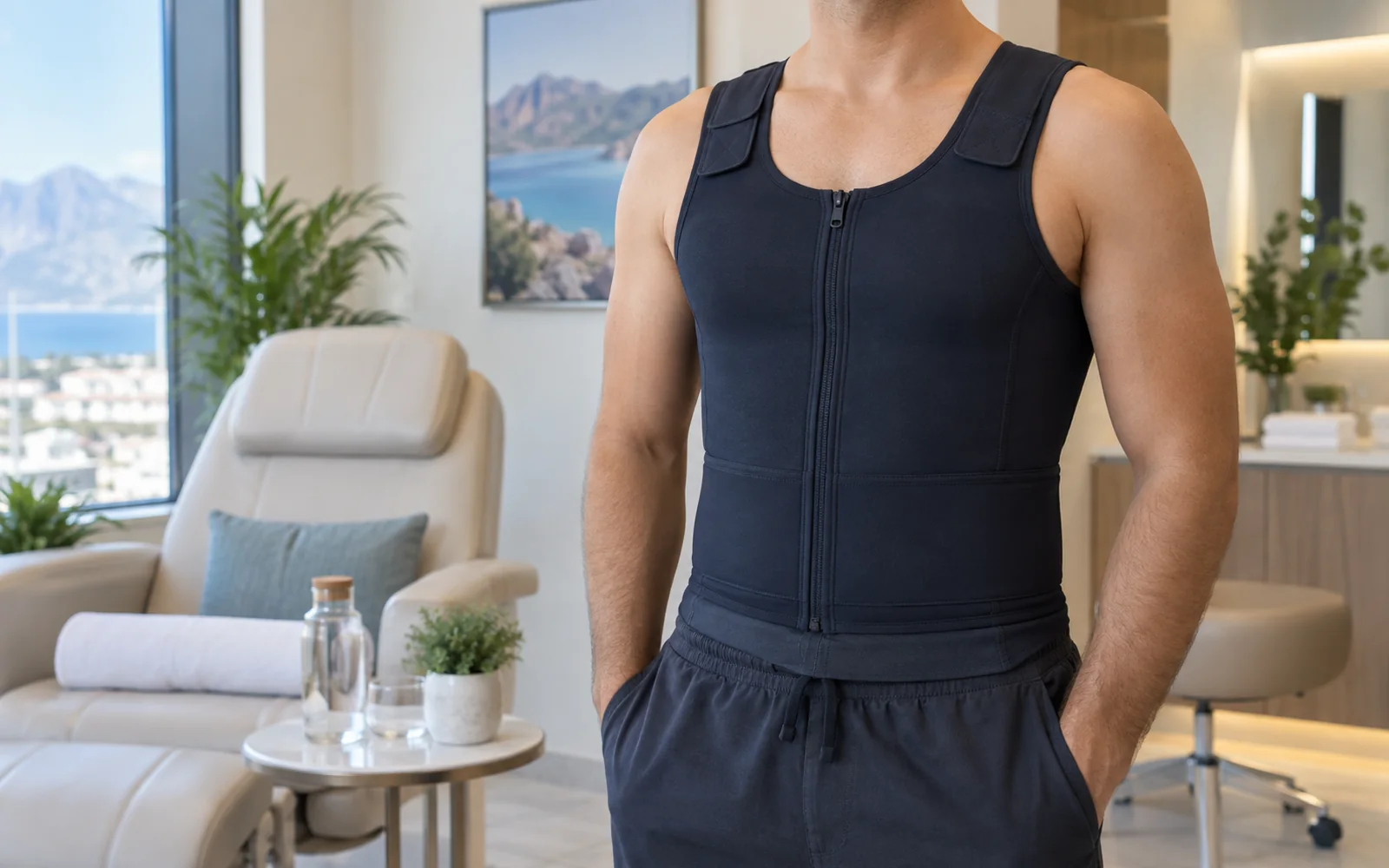
Swelling, tenderness and tightness are common early after male breast reduction. A fitted compression garment, incision care, gentle movement and scheduled reviews form the core of recovery.
Last updated: 15 September 2026 · Medically reviewed by Op. Dr. Bahadır Çelik
Gynecomastia surgery may reduce fat with liposuction, remove glandular tissue through an incision around the areola, or combine both techniques. More extensive skin excess can require a longer incision pattern. The procedure performed is the main reason recovery experiences differ.
Pressure, tightness, mild-to-moderate discomfort, swelling, bruising and tenderness with arm movement can occur during the first days. Dressings and an elastic support garment may be used to minimise swelling and support the new chest contour. A temporary drain is sometimes placed to remove blood or fluid. If a drain is used, emptying and recording instructions should come from the surgical team.
| Period | What may be noticeable | Planning note |
|---|---|---|
| First 24–72 hours | Tightness, swelling, bruising, dressings and sometimes a drain | Short gentle walks, prescribed care and adequate rest are priorities. |
| Days 4–7 | Tenderness may ease while swelling and colour change remain | Desk work depends on comfort, medication effects and the review plan. |
| Weeks 2–3 | Contour becomes clearer; firmness or temporary asymmetry may persist | Daily activity increases, but lifting and chest exercise still need approval. |
| Weeks 4–6 | Much of the visible swelling may settle and tissues begin to soften | Exercise and swimming are phased according to incision healing and technique. |
| Months 3–6 and beyond | Contour, scar colour and altered sensation continue to mature | Results are judged at planned reviews rather than from early swelling. |
This is a general framework, not a promise. Limited liposuction and a combined operation involving gland and skin removal do not have the same recovery. Physical work, smoking, weight fluctuation, general health and individual wound healing can all change the timetable.
The American Society of Plastic Surgeons notes that an elastic bandage or support garment may be used to minimise swelling and support the new chest contour while it heals. A garment that is too loose may provide little support; one that is excessively tight, rolled or creased can irritate skin and create focal pressure. Increasing pain, numbness, colour change or breathing discomfort should be reported.
There is no universal rule that every patient wears compression for exactly four weeks. Daytime and night-time use, washing breaks and transition to a lighter garment depend on the operation and review findings. Do not stop early or layer two garments unless your surgeon advises it.
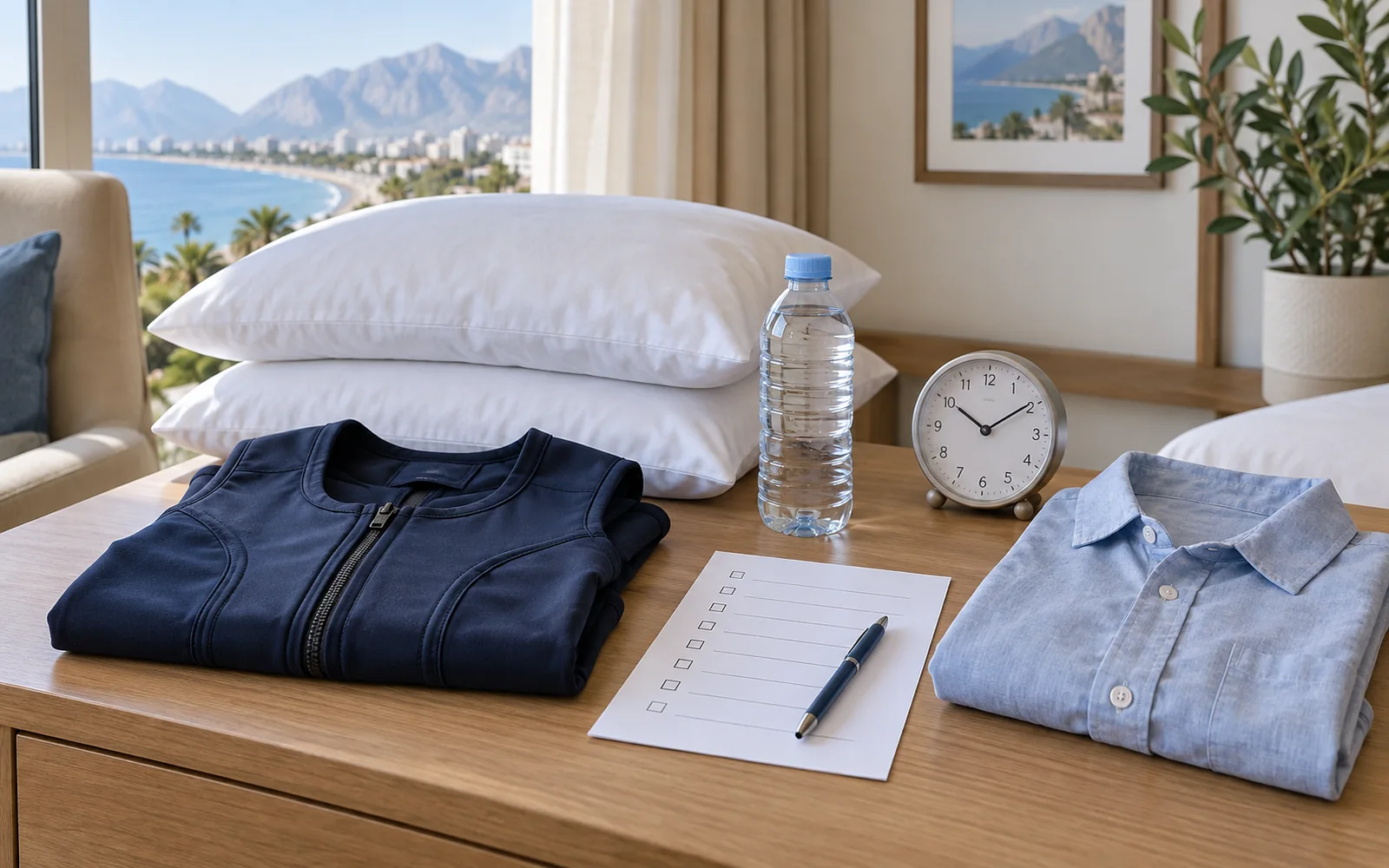
Swelling may not settle at the same speed on both sides. Bruises can change colour, and temporary numbness, tingling or sensitivity around the nipple may occur. Firm areas and an uneven feeling after liposuction can reflect oedema and healing tissue in the early phase. They should not be treated as the final result.
Massage is not suitable for every patient or every stage. Forceful early massage can stress an incision or healing tissue. Manual lymphatic treatment, massage or devices should be used only when recommended, at the time and with the method demonstrated by the surgeon.
The date for removing dressings, showering, changing tapes and applying products varies with the incision. Gland removal may require an incision near the areola, whereas liposuction uses small access points. More advanced skin excess can lead to longer scars. Your own wound-care instructions take priority over general online advice.
Drain removal is based on the amount and character of fluid, not only the number of days. Patients should not pull, shorten or change the suction of a drain. Scars can initially look pink, darker or firm, then mature over months. Sun protection and scar care begin only when the wound has closed and the clinical team advises them.
Sleeping on the back with the upper body slightly elevated can reduce direct chest pressure during the early days. Lying face-down and pushing strongly through the arms to get out of bed may be uncomfortable. Shower timing depends on the wound, dressing and any drain; never assume a dressing is waterproof.
Some people return to desk work within several days to a week. Jobs involving lifting, repetitive arm movement or physical contact require more time. Driving depends on more than pain: you must be able to turn the wheel, perform an emergency manoeuvre, tolerate the seat belt and be free from medicines that impair alertness.
Short walks may be encouraged early to support circulation, with duration and pace increased gradually. Running, swimming, push-ups, bench press, pull-ups and heavy shoulder or chest exercise can stress the healing area. The incision, swelling and extent of surgery should be reviewed before progression.
Being pain-free is not the only criterion. Light lower-body activity and heavy chest training may restart at different times. Because anabolic steroids and unregulated performance supplements can contribute to gynecomastia, do not resume them without discussing the risk with your doctor.
During the first weeks, the chest may look fuller, firmer or less symmetrical than expected because of swelling. Definition improves as swelling settles; scars and tissue softness mature more slowly. Comparing early photographs with a final result can create unnecessary concern.
ASPS states that results are permanent in many cases, while weight gain and causative medicines, drugs or steroids may affect maintenance. Never stop prescribed medication on your own. A new one-sided lump, firmness or enlargement requires examination rather than being assumed to be only cosmetic.
Rapidly increasing tight swelling on one side, bleeding that soaks a dressing, worsening pain, spreading redness with fever, foul discharge, marked skin colour change or a sudden change in drain output should be reported to the surgical team. Shortness of breath, chest pain, faintness or an unusual heartbeat require urgent medical assessment.
Social-media messages are not emergency care. Keep the postoperative contact number and the nearest emergency service available before the procedure.
The duration depends on liposuction, gland removal, skin excess and the review plan. Day and night use should follow your individual surgical instructions.
Some people with desk jobs return within several days to a week. Physical work, lifting or repetitive arm movement usually needs longer.
Push-ups, bench press and heavy chest work should restart gradually only after the incisions and tissues have been reviewed. There is no universal week.
Visible swelling often improves over the first weeks, while mild oedema, firmness and sensory changes can continue to settle for weeks or months.
Massage is not routine for everyone. Use it only if your surgeon recommends a specific method and start date.
Every surgical incision leaves a scar. Its position and length depend on the technique, and colour and firmness can mature for months.
Results can be long-lasting. Weight gain, hormonal conditions, certain medicines, drugs or anabolic steroids may contribute to renewed enlargement and should be assessed.
The balance of fat, glandular tissue and skin excess can be assessed together with general health, medicines and supplements to create an individual surgical and recovery plan.
Op. Dr. Bahadır Çelik: This page has been prepared for general patient education for the clinic of Op. Dr. Bahadır Çelik, Plastic, Reconstructive and Aesthetic Surgery Specialist in Antalya. Online information does not replace an examination, diagnosis or treatment plan.
Recovery varies according to liposuction, gland excision, skin removal, general health and individual wound healing. Follow only your treating surgeon’s instructions for compression, dressings, drains, showering, driving, work, exercise, massage and travel.