
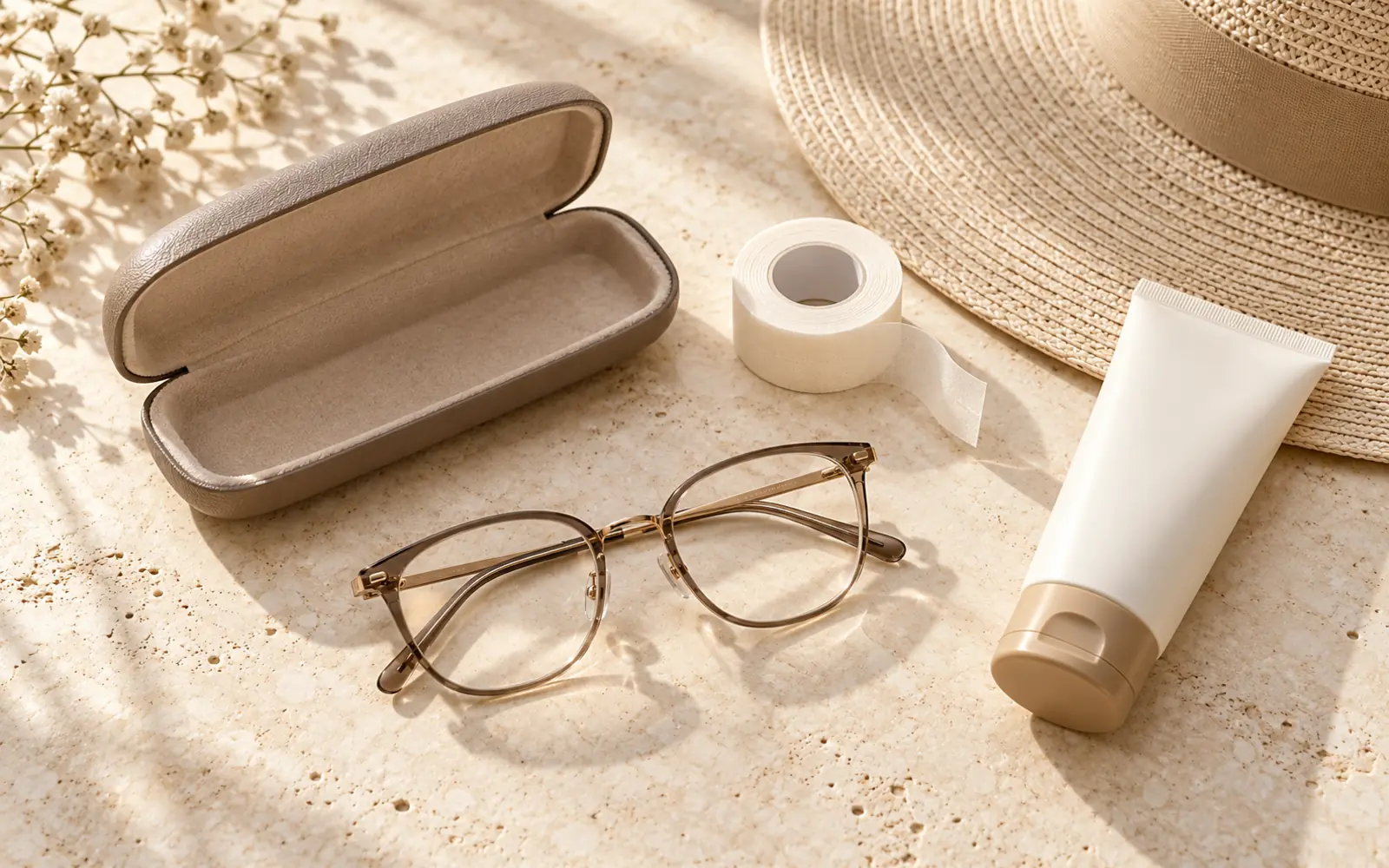
The safe time to resume prescription glasses or sunglasses after nose surgery cannot be decided by a calendar alone. Whether the nasal bones were moved, how the frame fits, and how you are healing all matter. This guide helps you prepare the right questions; the instructions from your operating surgeon take priority.
Published: · Last updated: · Medical review: Op. Dr. Bahadır Çelik
During rhinoplasty, the bridge may be reshaped with cartilage work alone, or controlled cuts may be made in the nasal bones. While bones and soft tissues are settling, a small load that is applied for many hours can be more relevant than a brief, gentle touch. Narrow nose pads, a tight bridge, a frame that repeatedly slides down and the habit of pushing glasses back up can all concentrate force.
Operations are not interchangeable. A limited tip procedure without bone work may have a different plan from a primary or revision rhinoplasty in which the bony vault was narrowed. Grafts, skin thickness, swelling, tenderness and the timing of splint removal can change the answer. A date found online cannot replace an examination by the surgeon who knows the operative details.
A nasal splint protects and supports the early result, but it is not a shelf designed to carry spectacles. Resting glasses on it may press the splint down, cause rubbing or contribute to displacement. Unless your team has demonstrated a specific method, do not balance glasses over the splint or add your own tape.
This table is not a prescription. It is a framework for discussing your own discharge instructions and follow-up findings with the surgical team.
| Period | What may be happening | Approach to eyewear |
|---|---|---|
| Days 0–7/10 | A splint, tape, marked swelling and tenderness may be present. | Avoid direct bridge pressure. Do not rest frames on the splint; arrange essential vision needs before surgery. |
| About weeks 2–4 | The nose may look better while bone and soft tissue healing are still early. | A “light” frame is not automatic permission. Use a contact-free option, time limit or support only if your surgeon approves it. |
| About weeks 4–6 | Tenderness often eases, but bone work and persistent swelling make a difference. | If cleared at review, a light frame may be trialled for short periods. Remove it if it causes pain, an indentation or persistent redness. |
| After six weeks | Healing is further advanced, although the nose continues changing for months. | Routine wear still depends on the operation and examination. Tight goggles, helmets and contact sport may require a longer interval. |
Mayo Clinic patient information advises keeping eyeglasses and sunglasses off the nose for at least four weeks and discusses taping or cheek rests when appropriate. Some academic postoperative protocols recommend a longer pressure-free period. These differences reflect procedure and protocol rather than a single correct date. Your surgeon's documented instructions should settle which timeline applies to you.
Any frame that sits on the nasal bridge must be considered. Prescription glasses may be worn for many hours, while sunglasses can be larger, heavier or tighter. Labels such as titanium, acetate or “ultralight” do not prove safety. Actual weight, fit, nose-pad position and whether the frame leaves an indentation are more useful.
A very light frame can still be unsuitable during early healing. If it produces pain, throbbing, persistent redness or a visible depression, remove it and contact the team. A frame that slides repeatedly may also lead you to push it up, applying repetitive force to the bridge or tip. Ask when a fitting appointment with an optician is appropriate rather than adjusting the frame yourself.
Sunglasses help with glare and protect the eye area outdoors, but a heavy pair is not the only form of sun protection. A broad-brimmed hat, shade and surgeon-approved skin protection can reduce exposure without loading the bridge until eyewear has been cleared.
If you already use contact lenses comfortably, they may reduce bridge pressure. They are not an automatic solution on the day of surgery. Dry eyes, medication, hand hygiene and the movement used to insert and remove the lens all need consideration. Ask both your surgeon and eye-care professional when you may restart. The week of surgery is a poor time for someone who has never worn lenses to experiment with them.
Some teams use medical tape to suspend a frame from the forehead, a purpose-made bridge device or supports that transfer weight to the cheeks. These methods are not universal. Incorrect tape can pull on the splint, irritate sensitive skin or still allow the frame to touch the nose. Use only the material and placement demonstrated by the surgical team.
For a short line of text, holding glasses in front of the eyes without resting them on the nose may help some people, but it also creates a risk of dropping or knocking them. Temporary compromises are not safe for driving, stairs, machinery or tasks that demand reliable vision. If you depend on glasses, build a practical solution into the surgical plan.
Bruised skin and any external incision can be sensitive to sunlight after rhinoplasty. Seeking shade, using a broad-brimmed hat and reducing exposure during the strongest sun offer pressure-free protection. Do not apply cosmetic products to a fresh incision, tape or splint. Once the skin has healed, ask when and where to use a broad-spectrum sunscreen of at least SPF 30.
Protection is not solely about scar colour. Heat and strong sun can feel uncomfortable in swollen, sensitive tissue. Conversely, a rule such as “never go outside for three months” is too rigid for everyone. Season, skin type, incision location and healing determine how shade, a hat, sunscreen and approved eyewear are combined.
A phone, computer or book does not shift the nasal bones. The practical issues are needing heavy glasses to see, dry eyes, headache, bending forward and remaining in one position for too long. Short breaks, positioning the screen at eye level and following head-elevation advice may improve comfort. New blurred or double vision should not simply be blamed on screen use.
Return to work and return to glasses are separate decisions. Someone working remotely may be able to resume with an approved vision solution, whereas a role requiring safety goggles, a helmet, a respirator or exposure to impact may need more time. The return-to-work guide explains the broader schedule. Take a photograph or example of occupational equipment to your follow-up appointment so its fit can be assessed.
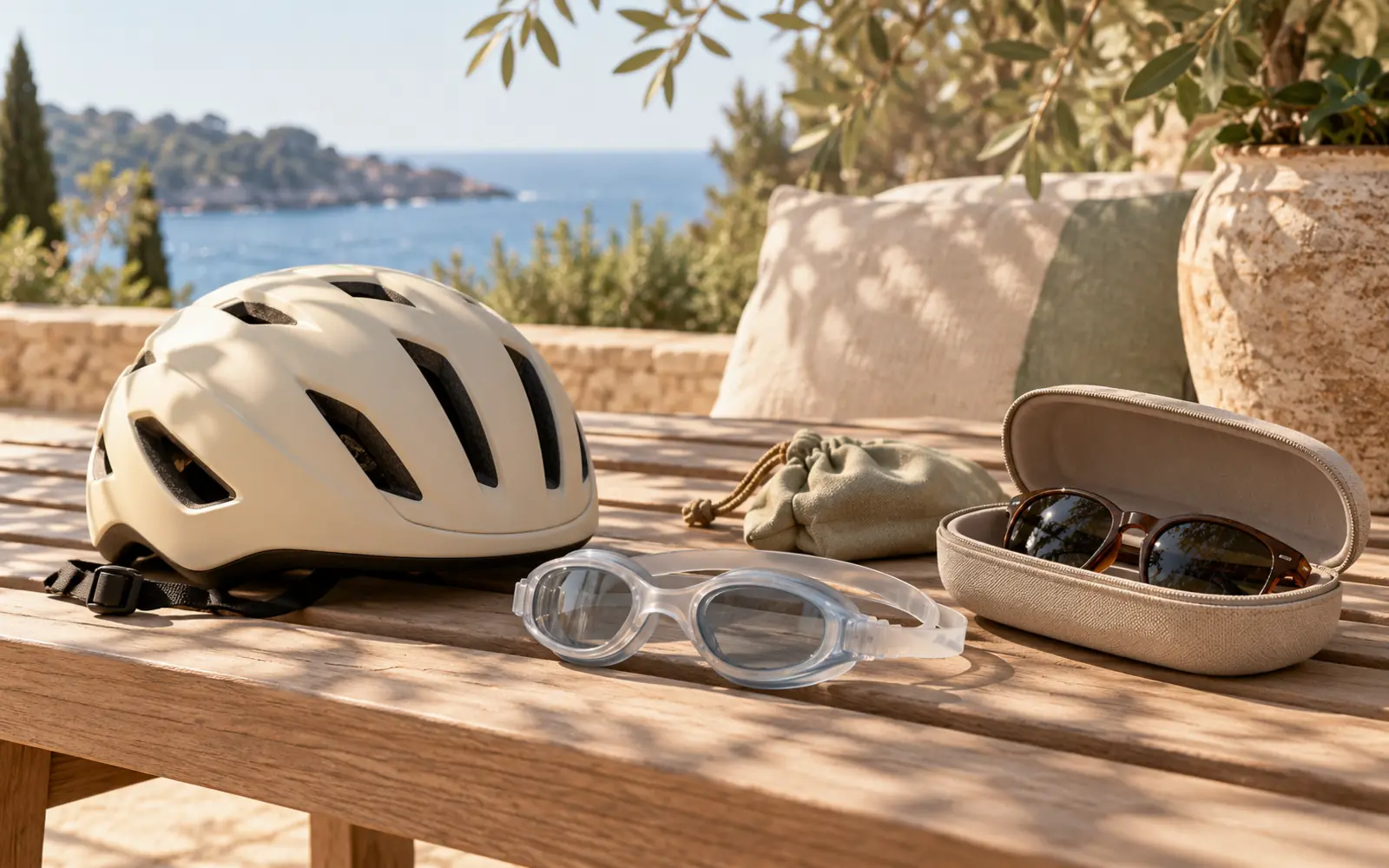
Gentle walking, strenuous exercise and contact sport do not share one return date. Early exertion, bending and a rise in blood pressure can worsen swelling or bleeding. Swimming goggles may seal around the eye sockets, yet strap tension and the movement used to remove them can still affect the nose. A diving mask applies broader pressure to the nose and midface.
Cycling, ski and motorcycle helmets can strike the nose while being put on or removed; internal padding may also compress the central face. Football, basketball, racket sports and combat sports add unpredictable impact. Some centres advise avoiding situations in which the nose may be struck, including contact sport, for about three months. The exact interval depends on the procedure and examination. Fitness does not substitute for tissue healing.
Before returning, ask three separate questions: Am I cleared for exertion? Does the equipment press on my nose? Is the accidental-impact risk acceptable? A positive answer to only one or two is not enough.
A brief, light touch does not automatically mean that the operation has been damaged. Remove the glasses, do not squeeze the nose and do not repeatedly press it while checking in a mirror. If there is no new bend, depression, increasing one-sided swelling, bleeding, pain or breathing change, inform the team of what happened and when; they may ask for photographs or an examination.
After a harder collision, fall or ball strike, do not try to straighten the nose yourself. If cold treatment was part of your instructions, use it only in the location and manner shown, without pressing on the bridge. A change in appearance, persistent bleeding or altered breathing may need same-day assessment.
Even if an indentation fades after a few minutes, repeated marks should be reported so the frame fit and wearing time can be reviewed. Do not start antibiotics, steroids or extra pain medicine on the basis of online advice. Your written discharge plan and emergency contact details take priority over general web content.
If you cannot manage daily activities without glasses, make this explicit during consultation. Bring your current prescription, frame and any workplace eye protection. If you use contacts, agree when they should be stopped and restarted with your eye-care professional and surgeon. Plan driving, childcare, screen work and travel around the early review dates rather than improvising after surgery.
The rhinoplasty recovery timeline covers swelling and activity; the swelling and bruising guide explains early visible changes. International patients can coordinate eyewear with how long to stay in Antalya. The goal is not to disrupt ordinary life unnecessarily, but to protect the nose from avoidable pressure and impact.
There is no single day for everyone. Your surgeon should clear you according to bone work, frame pressure and examination findings. Many plans avoid direct bridge pressure for several weeks.
Not unless your surgeon has demonstrated a specific method. A splint is not designed to carry glasses; a frame can push it down, rub the skin or contribute to movement.
Yes. Sunglasses that touch the bridge also create pressure, and large or heavy frames need particular care. A hat and shade provide pressure-free protection until the frame is approved.
If you already tolerate them, contacts may be considered when hand hygiene and eye comfort are suitable and your surgeon and eye-care professional agree. Do not try lenses for the first time during surgery week.
Only use this approach if your surgeon shows you the material and placement. Incorrect tape may pull on the splint, irritate skin or still allow the frame to load the nose.
Clearance for exertion is not the same as clearance for equipment. Pressure, the chance of hitting the nose while dressing, and impact risk must all be assessed; contact sport may require longer.
Brief, gentle contact does not always cause damage. Remove the frame and avoid pressing the nose; contact the team if you notice a new bend, worsening pain, swelling, bleeding or a breathing change.
Do not squeeze or try to straighten it. A hard impact, visible change, persistent bleeding, increasing swelling, breathing difficulty or a vision symptom needs same-day advice or urgent assessment.
Your operation, usual frames, work equipment and daily needs can be considered together when planning glasses, sport, work and travel.
Contact and appointmentThis patient-education content has been reviewed by Plastic, Reconstructive and Aesthetic Surgery Specialist Op. Dr. Bahadır Çelik. It does not replace an examination, diagnosis or personalised medical advice.
Published and last medically/technically reviewed: 30 October 2026, 13:00 (Europe/Istanbul). Source links were checked for accessibility and relevance.