
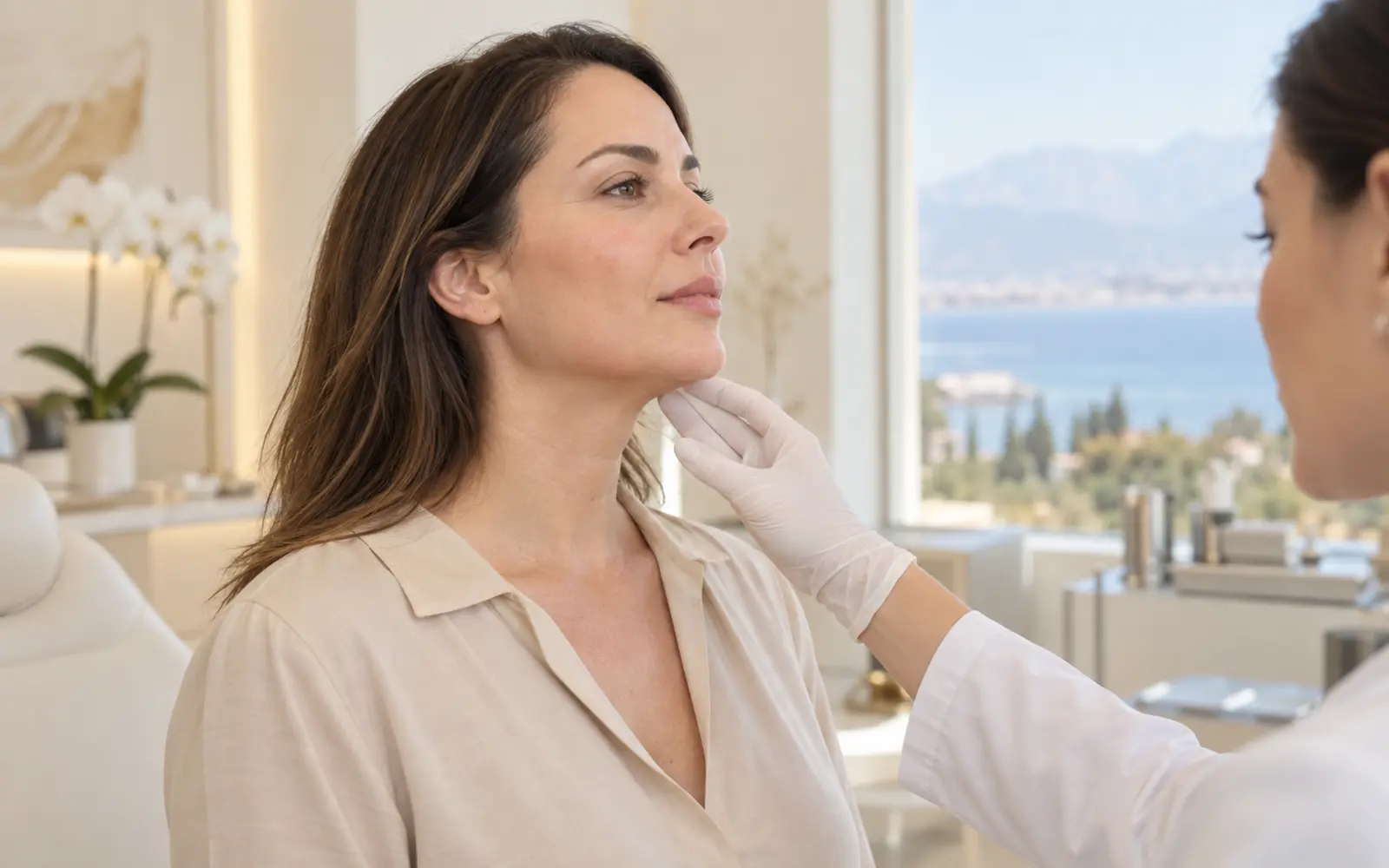
Recovery is individual: swelling and tightness are common early, while a clearer contour develops over the following weeks.
Last updated: 5 September 2026 · Medical review: Op. Dr. Bahadır Çelik
Submental or chin liposuction removes selected subcutaneous fat through small access points to refine the transition between the jaw and neck. Although the treatment area is limited, it still produces a normal surgical healing response. Swelling, bruising, tenderness, tightness and temporary numbness may occur. The two sides may not settle at exactly the same speed, so early asymmetry is not a reliable final-result test.
Head elevation, prescribed medication, short safe walks and incision care should follow the operating team’s written instructions. A fixed internet timeline cannot account for whether liposuction was performed alone or combined with a neck lift, chin procedure or another operation.
| Period | What may occur | Planning point |
|---|---|---|
| First 24–72 hours | Swelling, bruising, tightness, mild drainage and numbness | Rest, head elevation, gentle walking and wound care as instructed. |
| Days 4–7 | Tenderness may ease while visible swelling or bruising remains | Some people return to desk work; social visibility and job demands matter. |
| Weeks 2–3 | Bruising often fades; firmness, small irregularities or numbness may persist | Healing is reviewed; massage starts only when specifically advised. |
| Weeks 4–6 | Swelling is usually less obvious and the jawline begins to look clearer | Strenuous exercise and heavy lifting require clearance. |
| Months 2–6 | Residual swelling settles and tissues soften | The contour is judged after healing has matured, not from early photographs. |
These ranges are not guarantees. Skin quality, treatment extent, nicotine, age, swelling tendency and combined procedures can change recovery. Looking presentable after a week does not mean internal healing is complete.
Swelling is an expected response after liposuction. In the compact area beneath the chin, even modest oedema can look pronounced in a mirror. Temporary firmness, small palpable irregularities or numbness can occur while tissues heal. Their direction of change is more useful than a single day’s appearance and should be reviewed at scheduled visits.
A rapidly enlarging one-sided swelling, worsening pain, spreading redness, heat, offensive drainage or fever should not be dismissed as routine oedema. Aggressive squeezing or self-directed lymphatic massage can irritate healing tissue. Massage is not automatic; timing and technique depend on the surgeon’s assessment.
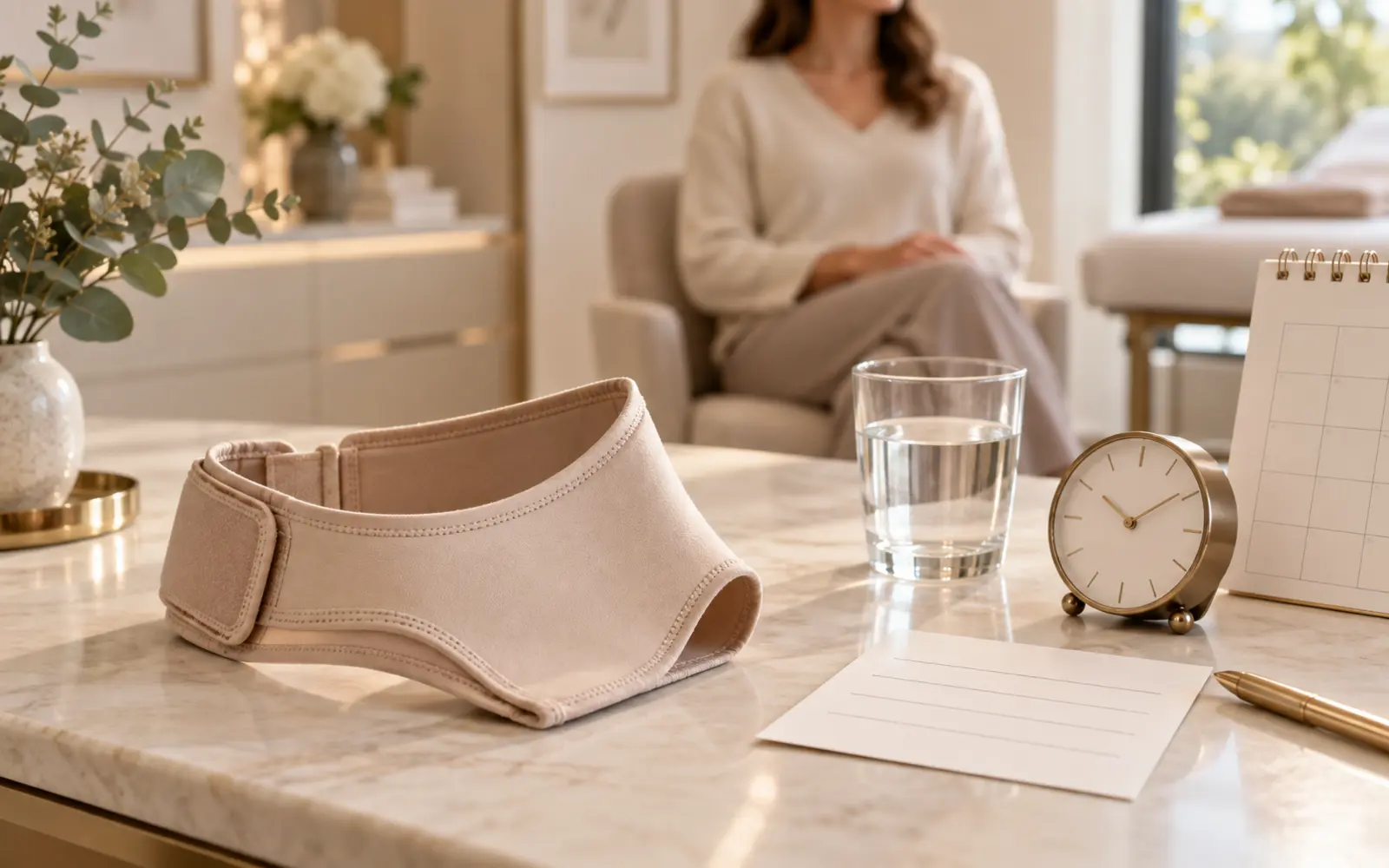
Compression may support healing tissues and help manage postoperative swelling. There is no universal evidence-based number of days that fits every patient. The treated area, technique, skin elasticity and surgeon’s protocol all affect the schedule.
The garment should not impair breathing, swallowing or circulation. Folding or focal pressure can irritate skin. Removal for washing or showering should follow written instructions. Contact the team if discomfort increases, numbness worsens or the skin changes colour.
If you travel to Antalya, keep the early days free of swimming, sun exposure, sauna, hammam and intensive sightseeing. Do not buy inflexible return travel before the follow-up plan is confirmed.
The jawline becomes clearer as swelling falls over several weeks; residual oedema and firmness may continue changing for months. Early images should not be presented as final results. Long-term contour is affected by weight stability, ageing, genetics and lifestyle; liposuction does not stop future weight change or ageing.
Liposuction reduces fat but does not remove skin. Elastic skin may adapt to the new contour, while marked laxity, platysmal bands or deeper neck ageing may require a different approach. Assessment for double-chin liposuction should therefore include skin and neck anatomy. The guide comparing chin liposuction and neck lift explains why one treatment is not suitable for every concern.
Seek urgent advice for rapidly increasing or tense one-sided swelling, uncontrolled bleeding, difficulty breathing or swallowing, chest pain, sudden shortness of breath, high fever, worsening redness, offensive drainage, escalating pain or a marked skin-colour change. Do not wait for a routine appointment.
Potential complications include bleeding, infection, fluid collection, prolonged swelling, temporary or lasting sensory change, contour irregularity, asymmetry, persistent laxity, scars and revision surgery. Individual risk depends on health and procedure extent.
Visible swelling often improves over the first weeks, but mild oedema and firmness may last longer. The exact course varies.
There is no single schedule. Follow the surgeon’s personal instructions rather than a generic number of days.
Some patients return to light work within several days to a week; bruising, swelling, physical duties and combined procedures can extend this.
No. It is not automatic for every patient or stage. If appropriate, the surgeon should specify timing and technique.
Temporary firmness and small irregularities may occur. Increasing pain, redness or rapidly expanding swelling requires assessment.
The contour becomes clearer as swelling settles; judging the final result can take several months.
It removes selected fat but does not remove skin. Significant laxity may need another treatment plan.
Skin elasticity, fat distribution and neck anatomy can be assessed together to decide whether liposuction alone is appropriate.
Op. Dr. Bahadır Çelik: This page was prepared for general patient education for the clinic of Op. Dr. Bahadır Çelik, a specialist in Plastic, Reconstructive and Aesthetic Surgery in Antalya. Online information cannot replace an individual examination, diagnosis or treatment plan.
Recovery varies with procedure extent, skin quality, combined treatments and personal health. Follow only your own surgeon’s instructions for compression, medicines, showering, exercise and travel.